
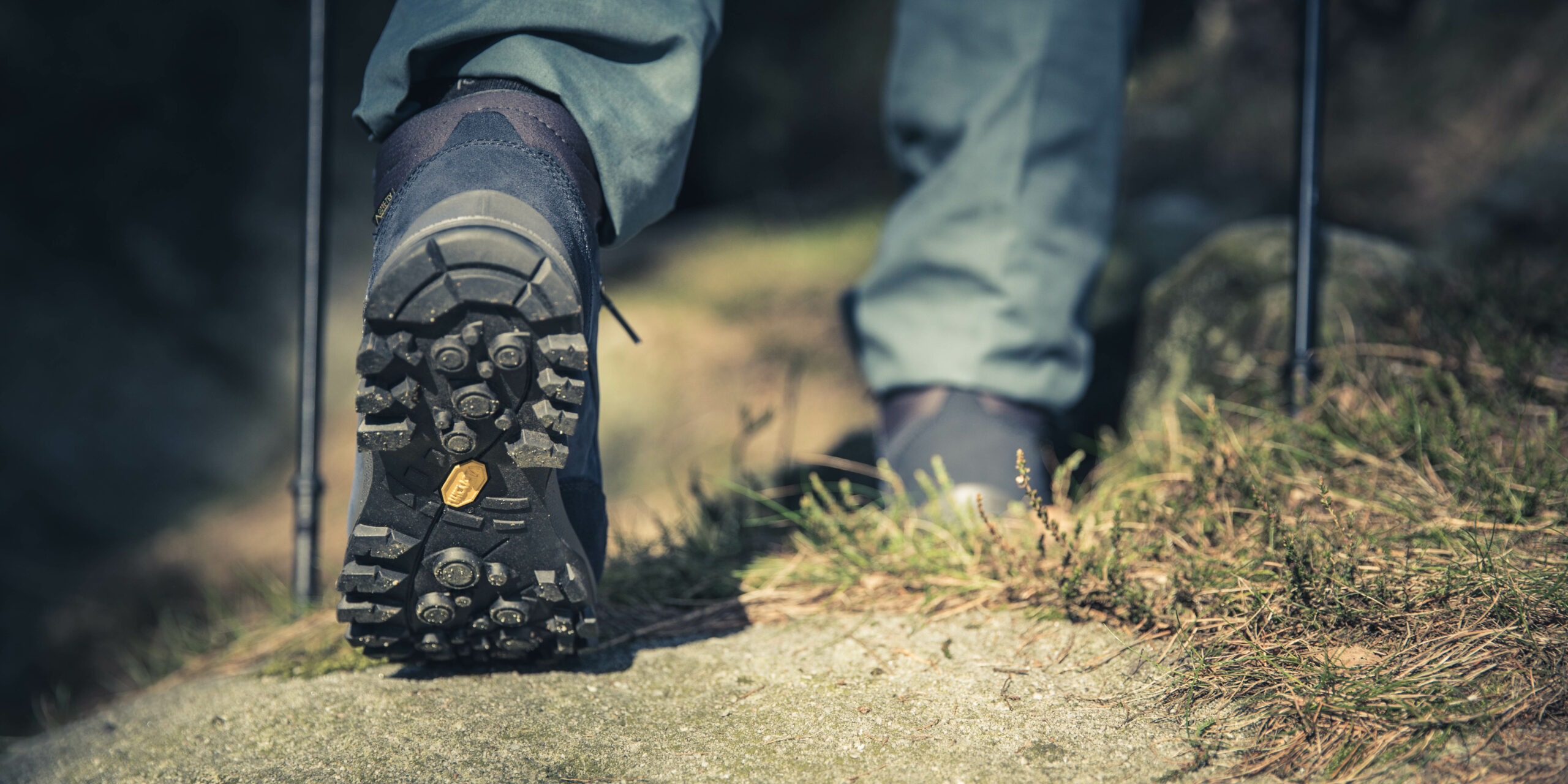
Walking boots that don’t fit your feet correctly can ruin your day, this best fit walking boot guide will make sure you don’t put a step wrong.
Your feet are unique and although you may know your shoe size you may not know your shoe width, and that some models come in different widths for the same shoe size that could better suit you. Getting that custom fit feel is not only more comfortable, it better supports your feet and joints, helping reduce fatigue and the chances of long term injury.
Take the following 6 steps towards your best fitting boot yet. Or, better yet, if you can, come and see us in one of our Eryri Outdoor shops for your free one-to-one boot fit.
Updated by Chris – Crib Goch Outdoor Staff Member Aug 2026
Let’s get started…
Step 1 – Pick the right Socks.
Good quality walking socks are of utmost importance when it comes to comfort when walking and hiking. The right pair of socks can offer cushioning to reduce impact, help prevent blisters and are made from moisture wicking materials that keep your feet dry and at a more comfortable temperature throughout the day.
It’s worth bearing in mind that socks can wear out too, often losing the cushioning before any noticeable holes appear. We stock many brands but one of my personal favourites is Darn Tough because if you do wear a hole in a pair they will replace them with a new pair as part of their lifetime guarantee.
Step 2 – Choosing the right Type of Boot
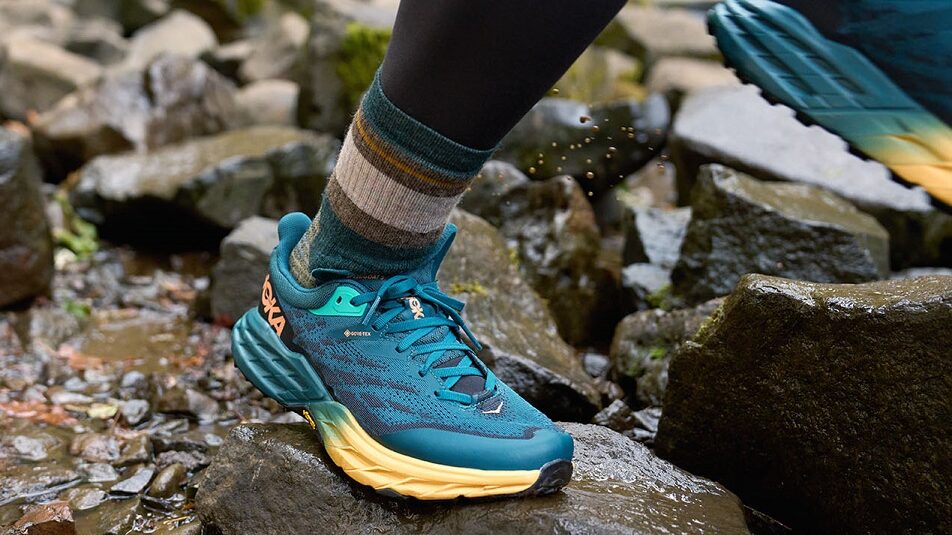
Choosing the right type of Boot is the next step and this comes down to where, when and how frequently you plan on using them. For example if you have to head out daily come rain or shine to walk a dog then a durable waterproof walking shoe is a great choice, however a more breathable non waterproof walking shoe would be the way to go for the fairer weather hikes. There’s no shame in being a fair weather hiker, I try to be! Equally non waterproof shoes can dry out quicker, many trail runners prefer the non waterproof shoe even when running in the wet!
“To make your boots last longer, don’t dry them on the radiator, this can ruin them, take the insoles out and stuff the boots with newspaper instead. Rapidly drying them cause too large a temperature gradient, leading to glue melting, cracking membranes and drying out the leather“
Celt Mountain Leader and Crib Goch Outdoor Team Member
Leather shoes still feature in our range because they offer increased longevity with the right care, which is something you should consider. Extending the life of your footwear makes each mile spent in them cost that much less.
The Rand: the rubber that comes up and around the boot above the sole, this can further improve the durability and longevity of hiking boots, this increases the weight and reduce the breathability.
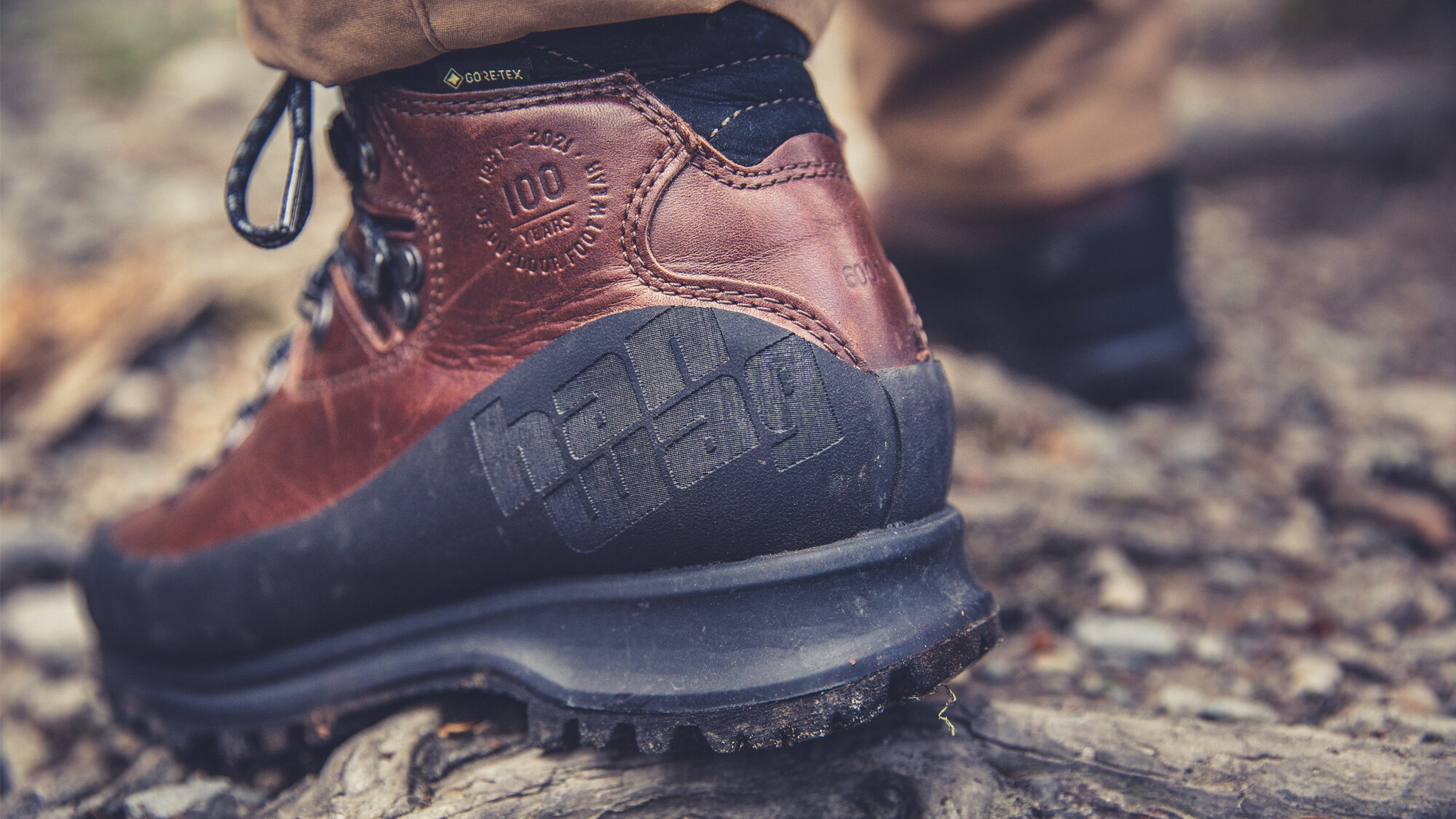
Then there’s the stiffness of the boot, this too is simple enough to consider. The best choice for rougher ground is a stiffer boot, a stiffer boot offers more support and can pair with a crampon. Softer more comfortable boots are best for shorter hikes on smoother terrain where fatigue is less of a worry.
If you’re at all unsure just tell us the terrain that your favourite hike takes you and we can recommend a boot to suit, from grade 3 scrambles to leisurely rambles. We’ve been doing this for years.
Step 3 – Measure your feet to find the right size
Measuring your feet is easy and essential, knowing your usual shoe size is just a starting point as many brands, just like with clothing, offer a slightly different fit for the same size, some with different width fittings. What you’re used to may not be quite right too, so why not check just to be sure, turns out I’d been sizing too small for years.
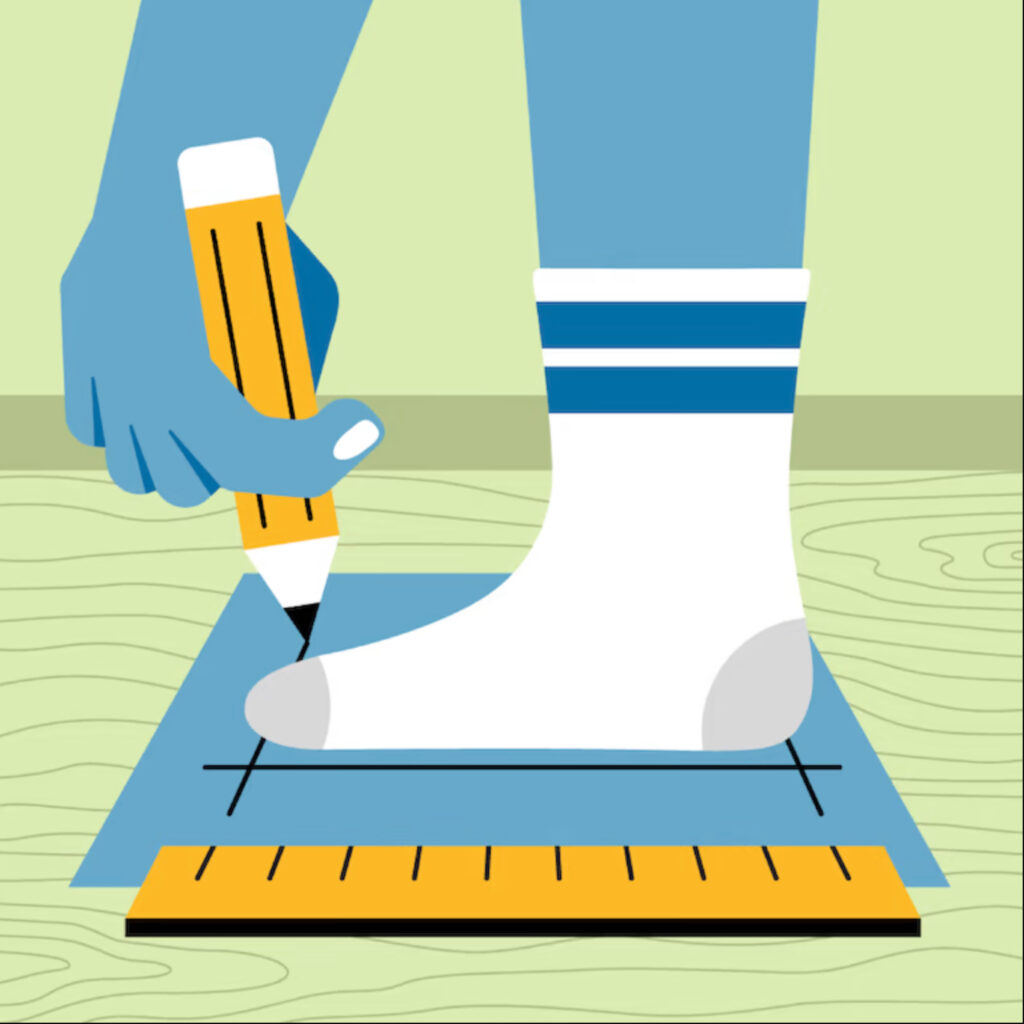
Simply place a sheet of A4 paper on the floor, up against the wall and stand on it (socks off). With your heel up against the wall, mark out the longest toe (it’s not always the big toe!). Repeat for the other foot and measure from the end of the paper to the two marks. Which is larger? It’s the larger of the two that we’ll be basing our Size choice on.
| UK Size | 2 | 3 | 4 | 5 | 6 | 7 | 8 | 9 | 10 | 11 | 12 | 13 | 14 |
| Foot Length (mm) | 216 | 224 | 232 | 240 | 248 | 256 | 264 | 272 | 280 | 288 | 296 | 304 | 312 |
Next up is the width, which is slightly more tricky but you’re trying to measure the largest width of your foot which is often across the ball of your foot. The easiest way is to draw an outline of your foot before reaching for the ruler.
The vast majority of brands cater for the more common Medium Size, but we have found that US brands tend to fit a little wider and Alpine brands fit a little narrower, many brands now have a wide option, with some offering a narrow fit (sometimes called precision fit)
| UK Size | Narrow | Medium | Wide | X Wide |
| 3 | 7.2 cm | 8.1 cm | 9 cm | 10 cm |
| 4 | 7.5 cm | 8.5 cm | 9.4 cm | 10.3 cm |
| 5 | 7.9 cm | 8.8 cm | 9.7 cm | 10.6 cm |
| 6 | 8.3 cm | 9 cm | 10 cm | 11 cm |
| 7 | 8.6 cm | 9.4 cm | 10.3 cm | 11.3 cm |
| 8 | 8.8 cm | 9.7 cm | 10.6 cm | 11.6 cm |
| 9 | 9.1 cm | 10 cm | 11 cm | 11.9 cm |
| 10 | 9.6 cm | 10.3 cm | 11.2 cm | 12.3 cm |
| 11 | 9.7 cm | 10.6 cm | 11.6 cm | 12.7 cm |
| 12 | 9.9 cm | 10.9 cm | 12 cm | 13.1 cm |
| 13 | 10.2 cm | 11.2 cm | 12.4 cm | 13.5 cm |
To help walk you through our brands and their take on sizing, check out this handy chart we made.
| Brand | Narrow | Standard | Wide |
| Altra | Options Available | Yes | |
| Aku | Yes | ||
| Crocs | Yes | ||
| Salewa | Options Available | Yes | |
| Hanwag | Yes | Options Available | |
| Hoka | Yes | Options Available | |
| Merrel | Yes | ||
| Dynafit | Options Available | Yes | |
| Inov8 | Options Available | Yes | Options Available |
| Garmont | Yes | Options Available | |
| Grisport | Yes | Options Available |
Step 4.
Now comes the exciting part, having chosen your footwear and taken delivery we best check the fit of your new boots. Start by removing the footbed/insole and stand on it, you’re looking to see if you have enough space between the end of your toes and the front of the footbed, which should be about a fingers width. This is best done standing up and with your usual pack on your back loaded with all the gear and snacks that you normally carry. Why? Because the weight causes your feet to expand, if you notice a significant change in your foot size when you stand up with your pack on then get in touch as we can recommend the correct insoles to help support your feet and prevent elongation and migration.
Throw the insole back in, swiftly followed by your sock wearing foot. Leave the laces undone at this point and slide your foot to the front of the boot, can you snuggly fit a finger in behind your heel? If you can’t then the boots are too short for you, if there’s room to wiggle your finger or even fit in another then the boot is too big. If the fit is not right just send them back and we’ll swap them out no problem. Here’s how to return your footwear
Step 5
Now happy you’ve got the correct size, with the boot still on, ensure your heels are at the back of the boot and start lacing them from the toes up. You’re not tying a tourniquet to stop the blood flow, but you do want the laces to be tight and secure throughout the lacing system. You know you’ve got it right when you can get a fingertip under the crossing of the laces, not your whole finger.
Step 6
The last check is to see if the shoe has the correct volume to suit your foot shape. We’re checking here to see how much space your foot takes up compared to the remaining space. In some shoes my narrow feet leave significant creasing at the flex point, with the eyelets near enough touching. If there’s too little room for your foot then they will feel too tight when laced up correctly, and just won’t look quite right.
You can make little changes here by wearing socks of different thickness, alternatively you can increase the volume by using a different lacing technique or decrease using different footbeds/insoles/reducers.
Step 7
If you’re happy with the fit then get out there and enjoy the trail. But if you’re unsure about any of the above then make the trip over to one of our stores and let our experts help you get it right. If you’ve ordered the wrong size simply send them back and we’ll ship out the correct pair right away, no questions asked. Getting the correct fit is essential, and due to this some brands might be off limits to your foot shape but don’t be deterred by this, as it just opens the door to a world of boots you might not have considered yet.
Crib Goch Outdoor Expert Boot Fit Tips:
- Your feet will warm up and swell during the day so the best time to try on your new boots is in the afternoon to early evening.
- Wear the walking socks you would normally use for hiking when coming for a boot fitting. Especially important for stiffer boots that you may be using in colder conditions and wearing thicker socks.
- Bring in your old boots, we can see how they have worn, discuss what might suit you better or maybe even just find a pair that’s similar if you can’t bear to throw them away.
Last of all we’re here to help and have a team of experienced hikers and qualified outdoor professionals who have Walked, Climbed and Explored throughout the U.K., Europe and the Rest of the World. So no question is too daft, trust me we’ve been asked them all.
Let us help you on your journey to your best adventure yet.
We’re here to help and have been for years!
Visit our website or stores for your next pair of Hiking Boots or Walking Shoes


